

Hands Run the Show
How small gestures set the tone for your stride.

I won’t horrify you with the probing, grinding details from my time in the dentist chair earlier this week, but at one point I noticed I was clutching the armrests for dear life. My body was so tense and rigid that my entire midsection was levitating above the cushion—perhaps so I could make a break for it if things got bad.
Loosening my grip and drawing several slow breaths, I felt myself relax and sink into the chair. I would not say I “enjoyed” the rest of the visit, but I was definitely more at ease, which got me thinking...
The same thing happens while running. I’ll catch myself with balled-up fists and a stiff body. These also tend to be times I’m preoccupied with some aspect of the run. Releasing the tension in my hands, everything changes. I become more fluid and am content being with the moment, not brooding over it.
Our hands hold the key to easier, more natural movement. They help us engage with a trio of levers foundational to running lightly: tension, tempo, and temperature. Let’s wrap our arms around each one, then talk technique.
Tension: Hold On Loosely (But Don’t Let Go)
Runners have to keep tension in balance. We need some tightness to enable elasticity, the rubber-band-like release of stored energy that makes movement possible. But too much stress (a rubber band at its threshold) limits the stretch-release cycle, and worse, risks snapping something important.
What we do with our hands while running is both an indicator and regulator of how much tightness we’re carrying.
Tension Indicator: Clenched hands and white knuckles reveal too much tension in the system. Open hands and floppy arms signal too little.
Tension Regulator: Softening our wrists, hands, and fingers can dial back overall tension. Tightening slightly can be useful in bursts of intensity.
We recently got an old four-wheeler for zipping around our rural Montana cabin. I quickly learned, clamping down on the controls leads to tired hands. The rigidity also causes shocks and vibrations to reverberate through my whole body. Better is a grip that’s tight enough to keep control, but light enough to avoid stress and fatigue.
Tempo: Turn, Turn, Turn
Running is rhythmic, musical in the interplay between its moving pieces. Our hands and arms are timekeepers, like metronomes setting the beat. They’re also good barometers of flow, like when you notice your foot tapping at a concert, but never intentionally started it in motion.
Tempo Indicator: Runners often fixate on the lower body, but the hands and arms reveal just as much about how smoothly we’re striding. Try to tune in.
Tempo Regulator: Hand tension signals tempo to the arms, which in turn initiate core engagement and leg swing. The chain can be dialed up or down.
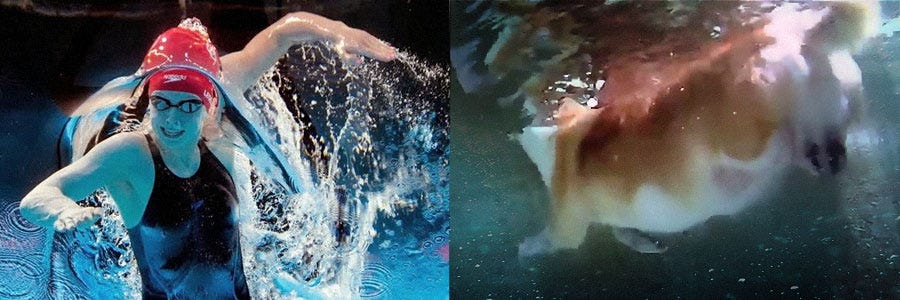
Picture Katie Ledecky in the 800-meter freestyle. Strong, relaxed hands pierce, pull, push, and exit the water in a symphony of graceful power. Now, think about how small dogs swim (I’m remembering our two chihuahuas, rest their jumpy souls). Little paws thrash, splash, and churn in a frantic, free jazz fight to stay afloat. In a world of wound-up chihuahuas, be a level Ledecky.
Temperature: Cool It Now
I’ve written about how heat changes the running game. There are lots of tips, tricks, and interventions to deal with weather extremes. But did you know, one of the most effective ways to regulate body temperature is through the hands?
In Run Elite, Andrew Snow describes “palmar cooling.” Here’s the gist. Palms have specialized blood vessels called AVAs, which move large volumes of blood close to the skin surface. Because of this, cooling the palms can draw heat from our blood and lower our core temp efficiently. It works for warming up, too.
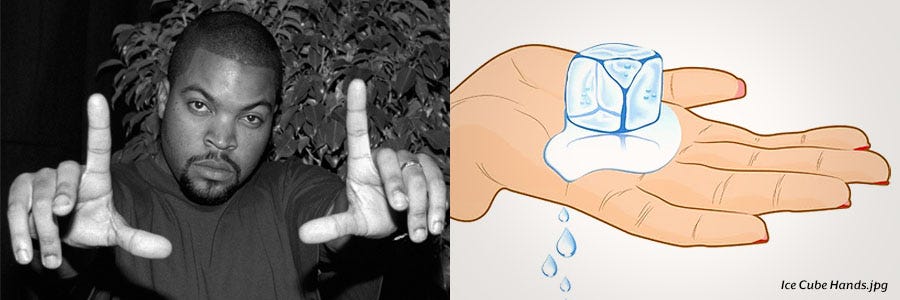
Temperature Indicator: If we notice our hands are hot or cold, there’s a good chance the rest of the body will follow.
Temperature Regulator: We can influence body temperature by holding objects (or immersing our hands in things) that are cool or warm.
My hands often get hot or cold. After reading Snow’s book, I started experimenting. Last winter, when temps got frigid, I carried hand warmers inside my mittens. It worked brilliantly. At a July trail marathon, with temps in the high 80s, I palmed ice cubes from aid station coolers and had a breakthrough day.
Technique: Holding out for a Hero
Hands are master multitaskers. They tell us a lot about our running and offer a quick way to make small adjustments. So, what are some practical cues for how to hold our hands? What do the pros do? Everyday runners?
What the Pros Do
Looking at photos of three professional runners tells a clear and unforgettable story about the role of hands in running.
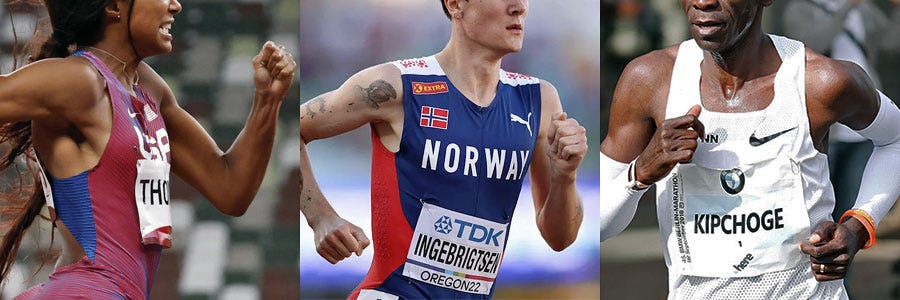
Sprinters run with short bursts of explosive energy. They splay their fingers when leaving the starting blocks, as if slicing the air. Getting up to speed, they grit their teeth and pull their fingers into specific kinds of fists (this article explains three). Tension is high throughout, and the hands reflect and reinforce it.
Middle distance runners—up to 5k on the track, 10k on the roads—must dial back the intensity in order to survive longer events and still have gas in the tank for a powerful finish. Look at their hands (and jaws) and you’ll see a “relaxed tension” that mirrors what’s happening with the rest of the body.
Endurance athletes like marathoners and ultrarunners are even more relaxed (we even smile sometimes). Hands are held in loose fists and arms often cross over the body—in contrast with sprinters, whose arms usually swing straight down the track. Distance runners know that tension is the enemy over the long haul.
What I Do
Far from a pro, I’m just a regular runner like you who wants to feel efficient and easy in my movements. Like a golfer, I want to be aware of, but not thinking about, what my body is up to. So, here’s what I do with my hands.
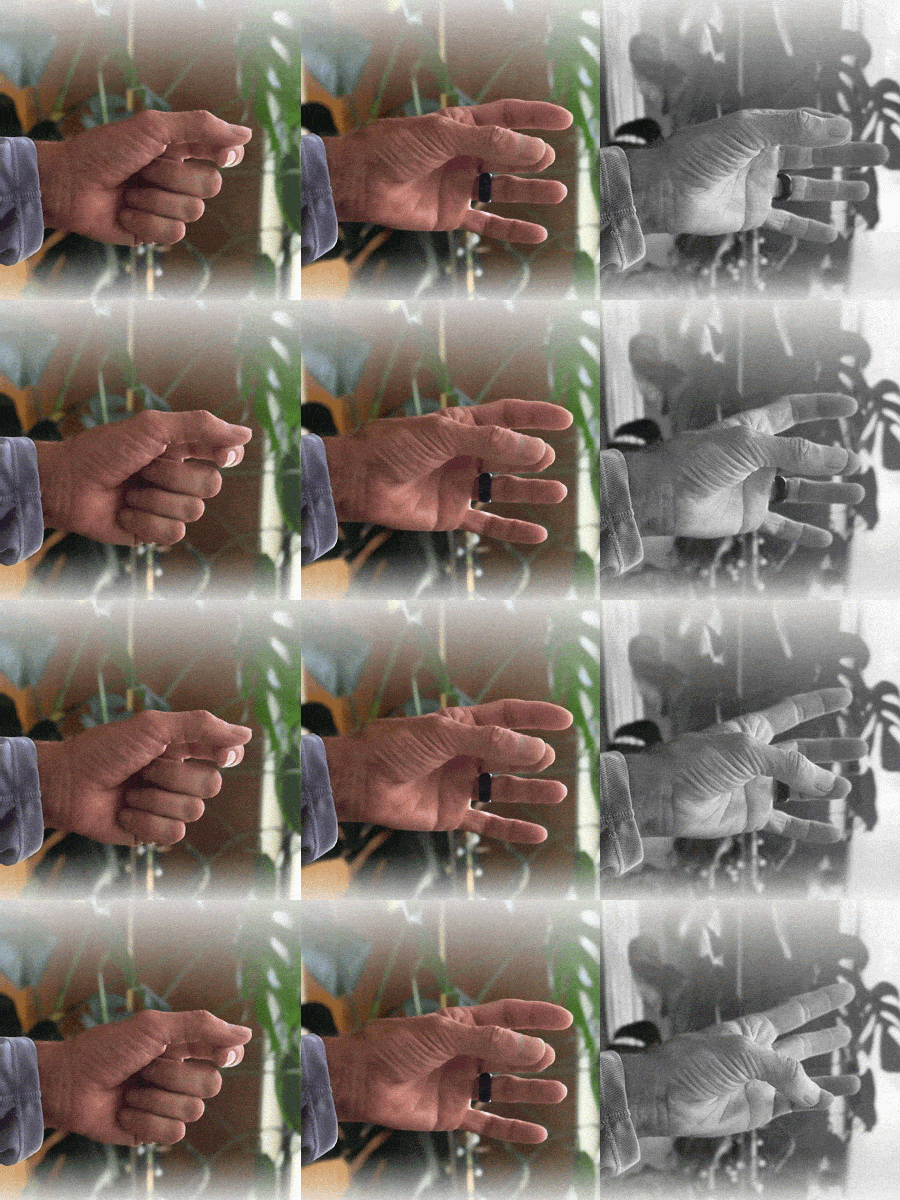
In ChiRunning, Danny Dreyer offers advice that has stuck with me. Fingers should be gently curved, not clenched into fists and not spread stiffly open. Thumbs rest lightly on top of the index fingers, pointing forward. Imagine holding a potato chip between them and not breaking it.
That’s it. That’s what I do. It took practice at first, but now it’s my natural position. Sometimes I increase tension and make more of a fist when digging deep in a workout or race. But mostly, that’s it.
Any time I need to reconnect with the run, I will purposefully touch my thump tips to my fingertips—yoga mudra style—holding on one finger or cycling through. Jury’s out on whether this helps chi (vital energy), but almost anything a runner can do to interrupt “mindless movement” is a net-positive.
The Finish Line
There’s a scene in Talladega Nights where a newly-famous Ricky Bobby (Will Ferrell) is doing his first interview with the press. Out of his element but trying to play the part, Ricky confesses to the camera, “I’m not sure what to do with my hands.”
It can be like that with our extraneous body parts while running. At the end of the day, there’s no one right approach. But there is a wrong one…forgetting that hands matter. They are guides, gauges, and governors of how the whole system moves.
Try to notice how tension, tempo, and temperature are expressed through, and moderated by, your hands. Playfully adjust and notice again. Small gestures ripple outward, changing how the whole run feels.
Our legs might carry us, but hands run the show.
Run lightly,
-mike
“But, what about my arms?” We’ll cover what to do with those swingin’ appendages in an upcoming article. Be sure you’re subscribed!
I love this post. I do the potato chip too! I heard Steve Cram, Olympian talk about this. I also do the thumb and finger movement mainly as a counting technique to distract me if I’m struggling. Looking forward to the “arms” post.
SO COOL. And that chip visual is *chef's kiss* amazing. 🥔